We are so excited to have an opportunity to guest post on One Stop Teacher Shop. Come check out our post on Publishing S.Q.U.A.D.s!!
Monday, May 18, 2015
Friday, April 24, 2015
Stop, Swap and Roll (and a Giveaway!)
We are so excited to share this post! We are participating in the Stop, Swap & Roll Linky party hosted by Jungle Learners. Such an awesome idea that brings so many amazing resources to thousands of blog readers!
We were fortunate enough to team up with Kim at Quintessential Lessons. Kim is a 5th grade math focus teacher who loves to get students excited about math. She strives to create games and activities that students enjoy while teaching and reinforcing key concepts. She also loves hands-on activities and getting the students up and moving. She tells us that it makes her day when her students ask to do the activities again. So crazy funny because that is exactly the response we got from our kiddos when they finished Kim's fantabulous activities earlier this week!
Check out Kim's Blog, it is packed full of activities and ideas to get your kiddos excited about
math!

Kim was kind enough to share her Fraction Bundle which includes three games your kiddos will LOVE!
Fractions is the biggest unit we teach in fourth grade and one of the most challenging for our kiddos. The way it works with our curriculum guide we spend the better part of November, December, and January on fractions. Mollie and I like to try and review fractions all spring to keep the skills fresh. Usually our announcement of some fraction practice brings on several moans and groans from our kiddos but that will not be the case again now that we have shared Kim's activities.
math!

Kim was kind enough to share her Fraction Bundle which includes three games your kiddos will LOVE!
Fractions is the biggest unit we teach in fourth grade and one of the most challenging for our kiddos. The way it works with our curriculum guide we spend the better part of November, December, and January on fractions. Mollie and I like to try and review fractions all spring to keep the skills fresh. Usually our announcement of some fraction practice brings on several moans and groans from our kiddos but that will not be the case again now that we have shared Kim's activities.
The Fraction Bundle includes three games: Fraction Go-Fish, Fraction Hunt, and Fraction Shipwreck.
Fraction Go-Fish puts a great twist on a classic game.
Students will love practicing their knowledge of mixed numbers and improper fractions in groups of 2 or 3.
Students each start out with four cards and work to make pairs by matching an improper fraction with a mixed number. I loved that my kiddos had to look at their card and ask an opponent for the card they were searching. For example, if a kid had five-thirds in their hand, they would have to ask another player if they had one and two-thirds in order to make the pair. It gave them such great practice converting between improper fractions and mixed numbers.
Fraction Hunt was by far my kiddos' favorite game! The game has three types of cards. The first type is simply a fraction that is not in simplest form (these cards do not have bears on them so they are easy to separate). This is the card that you will hand out to each student participating in the activity (you an also have kids work in partnerships). The other two types of cards are simplified fractions, one in number form and one in picture form. These are the cards you will post all over the room.
First of all, it was a blast finding places all over the room to post the cards. It reminded me of hiding eggs for an Easter egg hunt! I placed the cards on walls high and low, furniture, windows, and even the ceiling. Kids loved having to actually "hunt" for the cards, especially knowing that they were looking for specific cards to match their own. I have a very active class this year so the planned movement was exactly what they needed. It amazed me how focused they were!
Fraction Shipwreck is another game that includes movement and gives students practice with identifying the simplified form of various fractions.
Four fraction posters are posted on four different walls. Kids gather in the center of the classroom and the teacher holds up a card with a fraction on it. Students have to go to the wall that shows the simplified version of the fraction. Kim mentioned that this is a great activity to do in the classroom OR the gym. We did it in our classroom and it worked great but I would love to do this in our gym when we have one of those pesky indoor recesses due to weather!
If a fraction is held up that does not have a simplified version on the wall, students have to "swab the deck" and pretend to mop the deck as a pirate might do.
Of course my kiddos loved yelling "Arghhh" in their best pirate voice as they "swabbed the deck". In addition to swabbing the deck, the stack of cards the teacher draws from to show the students includes 8 movements that the students have to act out. My favorite was the "Crow's Nest" where students curled their hands around their eyes to resemble binoculars. They were adorable!!
My kiddos loved participating in all three of these activities and I don't think I will ever hear a groan again when we practice our fraction knowledge as long as we are able to practice by completing one of these activities.
Four fraction posters are posted on four different walls. Kids gather in the center of the classroom and the teacher holds up a card with a fraction on it. Students have to go to the wall that shows the simplified version of the fraction. Kim mentioned that this is a great activity to do in the classroom OR the gym. We did it in our classroom and it worked great but I would love to do this in our gym when we have one of those pesky indoor recesses due to weather!
If a fraction is held up that does not have a simplified version on the wall, students have to "swab the deck" and pretend to mop the deck as a pirate might do.
Of course my kiddos loved yelling "Arghhh" in their best pirate voice as they "swabbed the deck". In addition to swabbing the deck, the stack of cards the teacher draws from to show the students includes 8 movements that the students have to act out. My favorite was the "Crow's Nest" where students curled their hands around their eyes to resemble binoculars. They were adorable!!
To celebrate our swap, Kim is giving away her Fraction Bundle to one lucky winner. If you are interested in sharing this amazing activities with your kiddos, enter the Rafflecopter below to win your very own bundle!
a Rafflecopter giveaway
Only one winner?? No worries! Kim has ensured you are all winners this weekend by placing her entire store 20% off!!! Check out her store, Quinnessential Lessons to grab her Fractions Bundle or one of her other amazing resources 20% off!
Don't forget to check out all of the amazing resources that have been swapped by visiting Jungle Learners or clicking on the links below.
Information Investigators: Step #1 – Essential Questions for Authentic Learning
The
moment they hear the investigator music start to play in the background, the
students rip open the mysterious black box that has caution tape wrapped
tightly around the outside. Their hands plunge into the evidence box like
archaeologists dive into a treasure chest full of gold. Each student has a
proof pamphlet firmly held in their fingertips, almost too close to their
goggle-covered eyes. Some read their job description aloud to their peers loud
and clear, while others opt to read chorally and still others examine the
introduction silently in their minds.
Hello, all! Mollie here!
This short vignette is a typical scene from the
first few minutes of an Information Investigators session. I’m writing today as
a continuation of our Information Investigators blog post series that we
recently started following our presentation at the Michigan Reading Association
Conference. If you missed our first post of this series, click HERE to read up
on what Information Investigators is all about! Basically, Amy and I have
created a process and format called Information Investigators, where students
are learning Science and Language Arts standards in small groups through an
integrated, collaborative, and authentic project-based style.
Within this post, you will find tips on how to create an essential
question. This is the starting step to get in order before putting together
your Information Investigator pamphlet. In our opinion, we think of essential
questions as vital questions that are intellectually challenging and spark
conversation. Essential questions call for higher-level thinking, including,
but not limited to, analyzing, inferring,
evaluating, and predicting. These types of questions are difficult to create,
but fear not because you can do it! When they are used appropriately, you will
see the benefits through the growth in your students’ knowledge.
.:. Choose an important Science standard .:.
To begin, you first need a topic to base your essential question on. Choose a Science teaching standard from either your state standards or the proposed Next Generation standards that you would like to be the focus of your students’ investigation. This standard will be the main goal of your students’ entire work during this process. Sometimes we choose standards that we have not covered previously because we are doing the investigation as an introduction to the unit and other times we choose a standard that our students have already studied because it’s a continuation or review of their learning. It’s up to you to choose which point of the unit you want to use this format and which standard you want to cover!.:. Unpack the standard .:.
We use the term “unpack” a ton with our students. What we mean by this is to think about what is inside of the standard. How can you break it down? What does the standard require students to know in order to be successful at showing knowledge of the standard independently? Is there any background knowledge that the students must have in their schema? Answering these questions will help give you specific ideas for your essential question. This tip may take some time, but it’s extremely important and the time will be worth it!.:.Use specific types of questions .:.
Since essential questions must engage students in conversation and deep thought, they cannot be questions that have a “right there” answer, such as “What is a food chain?” This question has an answer that students can find in a text. There are some particular types of questions that we use to create our questions. They start with the following question stems: what if, should, why, how, and which one. Once you’ve chosen and unpacked your standard, match it with one of these sentence stems to form a question!.:. Make it interesting .:.
Information Investigators is supposed to be fun! Creating a real-world scenario that goes with your essential question is one way to achieve this key aspect of the process. For example, in one of the Information Investigators we’ve taught in the past on fossils, we have the students pretend that they work at the Grand Rapids Public Museum and are hired to create an exhibit for the museum. The students enjoy this challenge and it brings excitement to the process of learning.
It is your turn to try! You can now begin on your journey to teaching
and facilitating your first Information Investigators by creating an essential
question. We hope these tips give you a better understanding on how to create
essential questions. Click the picture for our Freebie Information Investigator
Starter Pack on TPT that will give you all the components you’ll need to create
your very own Information Investigators.
Sunday, April 5, 2015
Peep Into Our TPT Store for a Sale!
We are so excited to be joining some amazing sellers to bring you a little Easter sale. This is a great time to get those "can't live without" items on your wish list!
Everything in our store is 20% off today (even BUNDLES)!!! Our spring favorites are:
![]() |
| Earth Day is right around the corner. This pack will give your kiddos engaging and challenging practice with key standards based on important concepts related to Mother Earth! |
![]() |
| Our kiddos struggle with line plots and analyzing data. We created seasonal practice and they love working in groups to create line plots and answer challenging questions. |
![]() |
| We use our student run bookstores to finish out our Economics unit and it is a huge favorite of our entire school. I'm not sure who looks forward to it more, the teachers or the kids! |
![]() |
| Last but not least, can you believe it is time to start thinking of the end of the school year! Our kiddos LOVE completing a lapbook that records all that they love as fourth graders. |
Happy shopping!
Friday, April 3, 2015
You Oughta Know About...
We are so excited to be joining Jasmine McClain over at Buzzing with Mrs. McClain for another You Oughta Know Blog Hop. Be sure to check out her blog, it is ADORABLE!!!
Our You Oughta Know post is all about Information Investigators. Information Investigators is an exciting and engaging process that allows students to examine a variety of materials using higher-level thinking skills to answer essential questions based on science and social studies standards in a collaborative environment.
This process has been extremely successful in our classrooms because it makes the connection between reading strategies and skills found in the Common Core State Standards with reading informational texts including charts, graphs, photographs, etc. Students are provided with an engaging opportunity that encourages them to persevere with grit and enthusiasm.
We begin by presenting an essential question embedded in a real-world situation. Below is an example of an essential question and real-world situation.
Our kiddos love the idea of having a job! They take their job very seriously. You can see that this essential question requires the students to first determine what a behavioral and structural adaptation is and then what types of adaptations rabbits have.
Students, in groups of 4, are then given a box of "exhibits" which consists of photographs, informational texts, articles, as well as links to various websites, videos, and songs that all provide information surrounding the essential question.
This photo shows our Information Investigators box, which we bought at IKEA and covered with "caution" tape and an Information Investigators sign, and some of the materials we placed in the box for this Information Investigators.
Students view themselves as investigators who must sift through the information provided in order to identify valuable information and they record the information in a research pamphlet. The pamphlet can look any way you want. It might be a foldable, lapbook, or simply a small booklet. Below are some photos of the pamphlet sections we created for our kiddos.
![]() |
| One important part of Information Investigators is giving students an opportunity to reflect on their learning. |
![]() |
| This showcases the job description (essential question) as well as the Science and Reading goals. The second portion is where kids record their answer to the essential question independently. |
![]() |
| This part of the pamphlet changes depending on the reading standard. This is where the kiddos work with their group to record information they feel is important to answering the essential question. |
We try to plan an Information Investigators for each unit of study. Sometimes we begin the unit with the activity to give students prior knowledge on the topic. However, sometimes the concept is too challenging to start with and requires some direct instruction before beginning Information Investigators. Finally, there are units where we use Information Investigators as a review or final activity in a unit. It all depends on the concept that is covered.
If you are interested in creating your own Information Investigators, check out this freebie in our store that will walk you through step-by-step.
Be sure to follow us at Two Nuts Teachin' from the Same Tree so you will be notified when we add Information Investigator kits to our store. This is the first in a series of blog posts about Information Investigators, so check back soon or follow our blog to be notified when a new post is up!
http://twonuttyteachers.blogspot.com/2015/03/You-Oughta-Know-About
Monday, March 9, 2015
Worksheets Don't Grow Dendrites Book Study: Chapter 3
We are excited to be joining the Worksheets Don't Grow Dendrites book study. This week's host is Mrs. Willis' Kindergarten. Hop on over to check out what others are saying about Chapter 3 of this amazing book.
This book study came at a perfect time for us. As many of us are preparing for our state assessments, we tend to try to create "test-like" situations, which unfortunately looks like a lot of worksheets. This is not how Mollie and I run our classrooms on a day-to-day basis and we really struggle with this. This text helps us to embrace the fact that it is okay to not change how we design our instruction and that continuing to use a variety of teaching tools will prepare our kiddos to do well in any assessment situation.
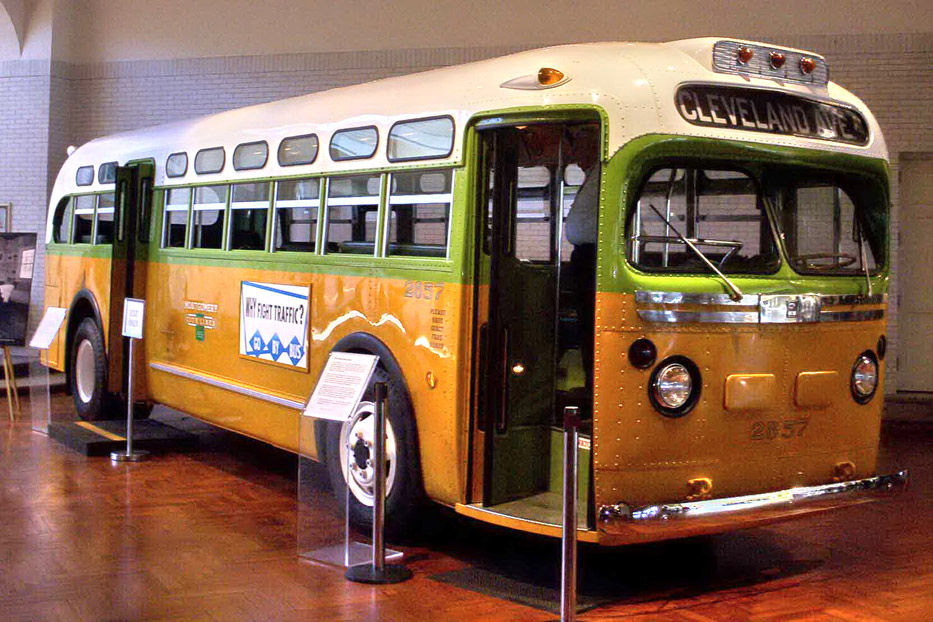
Chapter 3 is all about field trips and the potential learning benefits they have. We try to attend at least three field trips a year. Each field trip seems to have its own purpose. Some support our standards in a very direct way. One trip that hits upon several Social Studies standards is Henry Ford Museum and Greenfield Village. Henry Ford is known as a car man but more than anything, he was a historian. It is a trip back in time and our kiddos LOVE every minute of it.
The kids can't believe they are actually sitting in the same seat Rosa Parks sat in.
The kids love checking out places like the Wright brother's bicycle shop, Thomas Edison's workshop, and the home of Noah Webster to name just a few.
Other field trips we take focus on more than just the standards. For example, to support our Economics unit we take our kiddos on a tour of Barnes and Noble and to Red Robin for lunch. The kids hear about goods and services in two different industries as well as learn what skills are needed in each job. On top of all of that, our kiddos have a chance to practice using their manners out in our community. Something we feel is extremely important.
Finally, some field trips are simply planned to expose our students to experiences they may not get other wise. Marcia Tate discusses how she and her daughter take students to dinner and the ballet. This hit home with me because it is the same kind of cultural experience we try to provide for our students by taking them to Art Prize here in Grand Rapids. This is an amazing event that allows artists from all over the world to submit their work to be seen all over our beautiful city.
After reading this chapter of the book, I realized that we need to incorporate more smaller scale field trips into our year. We need to look into virtual field trips and what types of field trips we can take without even leaving home!
Sunday, March 8, 2015
Sunday Scoop! 3.8.15
Hello there!
Amy here linking up with Teaching Trio for a little Sunday Scoop. Check out the link below to see what some amazing bloggers are up to this Sunday!
I hope you have a fantastic Sunday and accomplish all you need to do, hope to do, and are HAPPY to do!!
Amy here linking up with Teaching Trio for a little Sunday Scoop. Check out the link below to see what some amazing bloggers are up to this Sunday!
Here is what I am up to today. Nothing too exciting but isn't that what makes Sundays so wonderful!!!
I hope you have a fantastic Sunday and accomplish all you need to do, hope to do, and are HAPPY to do!!
Subscribe to:
Comments (Atom)